Children work on their own projects and learn by making real things.
Enquire about a T-LABWatch it workT-LAB is not a programme you implement. It is a community you grow, alongside children who elect their own teams, manage their own economy and make things that genuinely matter to them.
We have spent 10 years learning how to build this. We will spend a year alongside you, learning how to build yours.
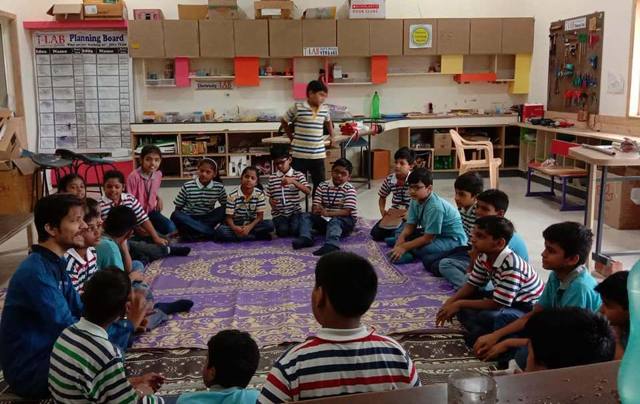
An elected Planning Team manages the project declaration boards and the weekly sharing meetings. A Finance Team runs the Goin economy, which children use to buy raw resources. A Material Team oversees tools and resources. Children hold real authority, and develop real responsibility.
The Goin is T-LAB's internal currency. Children earn Goins for making and sharing, spend them on materials, and negotiate the value of their finished projects with peers. Economics, lived and not taught.
No assigned tasks. No required topics. Every child chooses what to make, plans it, builds it, fails, iterates and presents it. The facilitator supports, but never directs.
Children should receive appreciation as much as resources. Peers give it naturally, and a facilitator learns to give it too, seeing the effort inside every attempt, finished or not. The MiniGuru community backs this need.
A peer's project from an Indian setting, made from what was around them, triggers a child to try. Goins make the effort feel valued. Views are not the purpose.
We customise each stage to your budget and interest.
We begin by coming to common ground. We prepare a draft for the first conversation, orient the school and its staff to T-LAB, identify the space, and agree a plan to execute it together, set down in an agreement.
We spend time in your school, meeting teachers, and run a 3 to 5 day introductory, open-ended tinkering workshop with children. At the end, we and the children reflect on the workshop, and this leads to planning and designing a permanent lab for them. Together they freeze the T-LAB system: the election of the teams, the norms and systems that run the lab, the Goin currency and resources, the planning board, and sharing and selling back their projects.
It ignites their dream, and the lab becomes a co-creation. The school ensures resources, space and a schedule, while children collect junk and prepare to run the space.
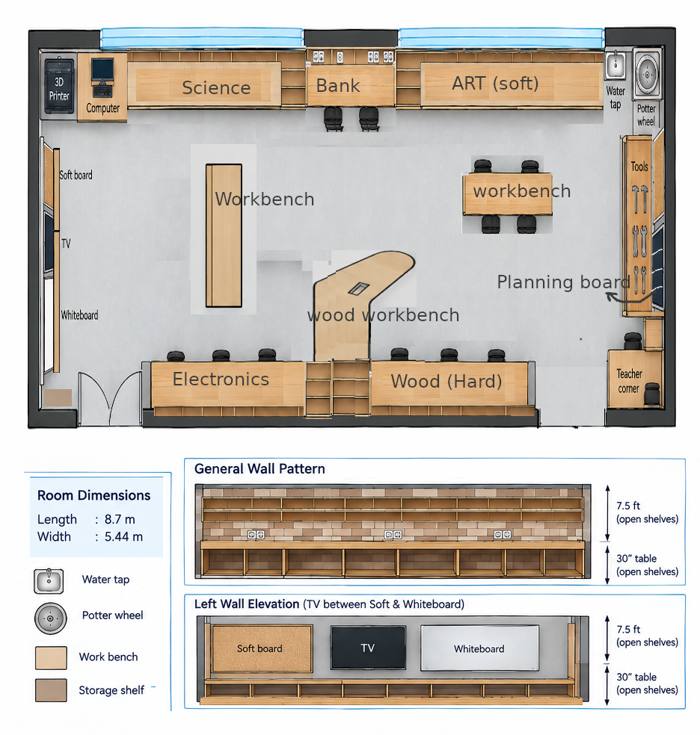
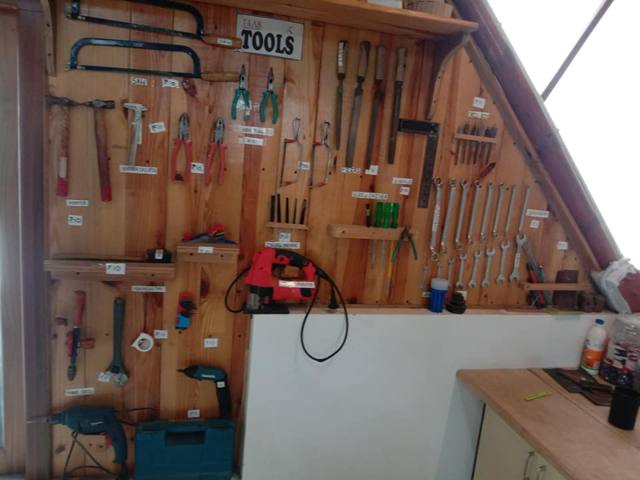
A layout, material list and session structure tailored to your room and your school's rhythm, designed with your team, not for them. We work with your staff, an architect and others to build the physical lab to your budget. Zones typically include science, electronics, wood, art, a bank, a planning board, a tool wall and a teacher corner.
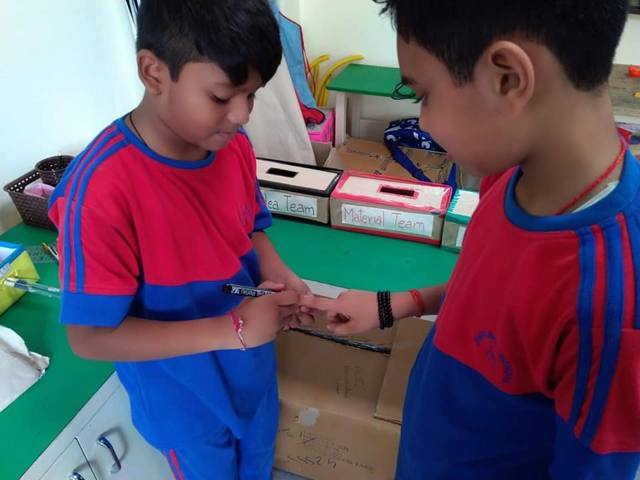
Each new batch elects its own Idea, Bank and Material teams and begins the cycle again. Children declare their candidature, canvass and ask for votes. Only the election commission, which is also children, applies ink on the finger, the most trusted way to identify those who have voted. This is how a T-LAB management team is chosen, fairly and by the children themselves.
Each child visits the lab at least twice a week, for a full block period, in batches of up to 25. We create a dedicated teacher who stays through the day, and batches have their place in the timetable. Three to four batches visit every day, so 200 to 250 children can use one lab each week. We build the timetable with your school.
During this time children plan and work on their projects at their own pace and interest. They follow the systems they decided together, and discuss democratically whenever an issue arises.
We start the lab and work beside your facilitator and the children for some days on every visit. It is an orientation in how to observe, question and trust, not a one-time training. Support is intensive in the first months, then eases to two to four days every second month. The goal: a lab that runs itself.
To keep the energy alive we organise frequent events through the year, where children share their work with parents and interact with them. Families become part of the lab's story, and children see that what they make is valued at home too.
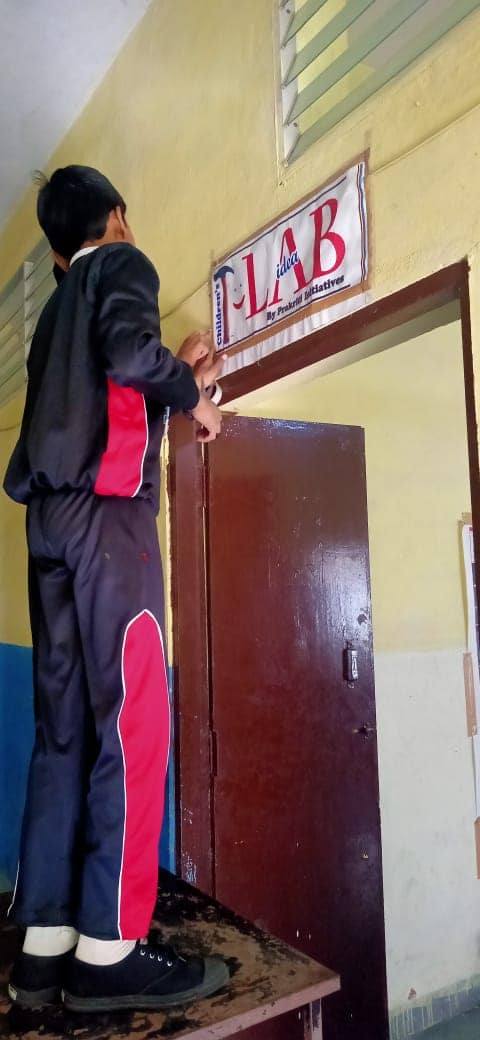
A layout shaped to your room, your children and your budget, designed with your staff and architect. We plan the zones, storage, tool wall, planning board, bank and meeting circle so the room supports children working, sharing and governing themselves.
A curated kit across Electronics, Mechanics, Soft Cutting, Hard Cutting and General Science. MiniGuru is the one source: a suggested list for each project, and AI search on Amazon.in at the lowest price for everything else.
A document of how T-LAB has evolved and the learning journey behind it. It touches every aspect: the Goin economy, elections, planning board, sharing protocol and facilitation. It is written to widen your understanding of how to help children's creativity and learning grow.
A dedicated facilitator is the heart of the lab. We orient and mentor them in how to observe, ask generative questions, appreciate unfinished attempts and hold space without instructing, with hand-holding on every visit.
We stay with you for a minimum of a year: onsite visits, remote support, reflection sessions, and events with parents. Support is intensive at first, then eases to a rhythm your school can keep.
Your children and facilitators are welcomed into the MiniGuru community, where they share projects with young makers in other T-LABs, earn Goins, receive appreciation from peers, and learn from schools across India.
Depends on the number of children and the grades they are in. School-managed procurement under our guidance.
Private schools have invested Rs 2 lakh to Rs 30 lakh in their lab. It becomes part of the school's reputation.
Typically 25 to 30 days over the year: intensive at first, then two to four days every second month. Travel, food and stay are arranged by the school.
Figures are indicative and every T-LAB is customised. Call us to talk it through and finalise.
Enquire now Call us ▶A T-LAB election, Sunbeam School, Mugalsarai
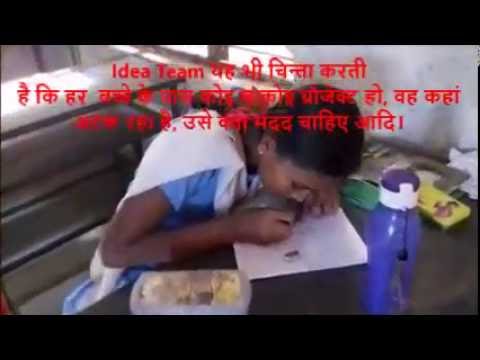 ▶T-LAB in a government school
 ▶T-LAB in a school with few resources
Yes. T-LABs run in private schools, government schools and NGO programmes. The model adapts to budget and context.
Yes, it works with all of them. Each of these spaces gives children room and tools. A child-led system is the engine that runs them, and it makes the same space much more productive.
MiniGuru is the source: a curated set, a suggested list for each project, and AI search for the rest on Amazon.in at the lowest price. Parents review quality and quantity before ordering.
Every attempt carries planning, hunting for materials and problem solving. Peers recognise that effort, and your facilitator learns to value it too.
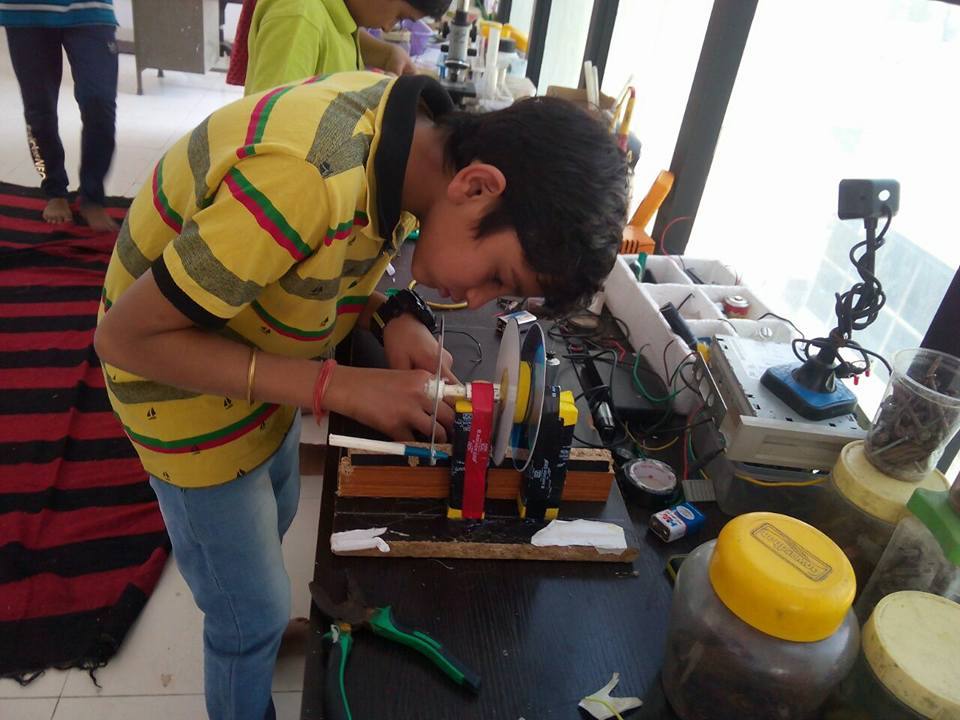
Immersive, open-ended workshops where every participant makes a real project. No kits, no instructions: real materials and real learning, for students and for teachers.
Introductory open-ended STEAM sessions. Every participant completes and shares a project. Ideal for school events, fests and orientation days, for students and teachers.
A deep-dive making experience across multiple sessions. Multiple projects built, iterated and shared, with design thinking and hands-on prototyping. Ideal for summer and winter camps, with teacher orientation and facilitator enrichment.
Every workshop is planned around your group, your days and your space. Call us to talk it through and finalise.
Enquire now Call us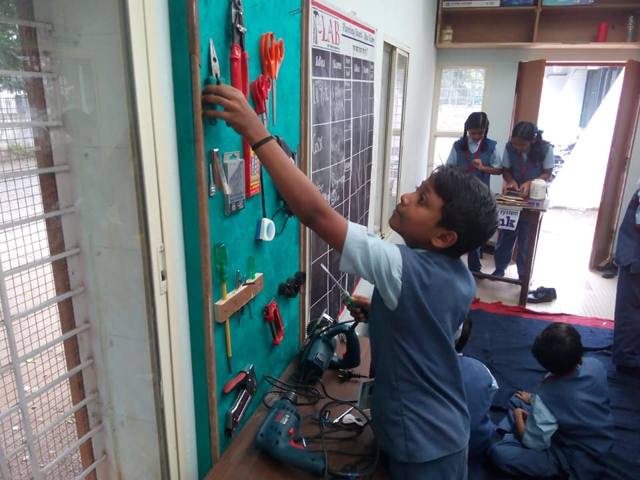
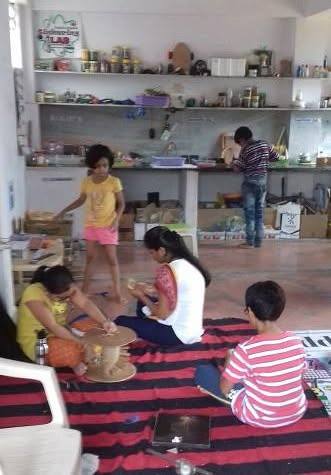
Every child has something they are quietly drawn to, and most homes have nowhere for that curiosity to go. A Home Corner gives it a place.
Enquire nowA short film in Hindi, in the simplest words, from Pramod Maithil.
When a child has their own corner, their own tools and materials, it signals that this is real. That signal changes how they engage.
The right materials in view spark projects that would not otherwise arrive.
The best making happens over many sessions: returning, rebuilding after failure, trying a different way.
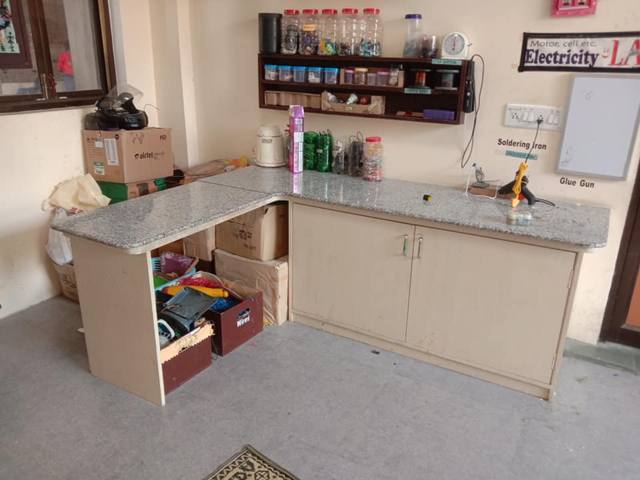
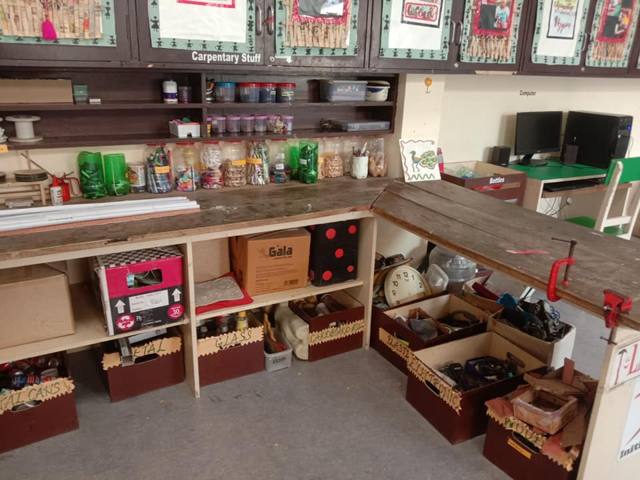
A short call with you and your child together. The child's voice shapes everything that follows.
A layout for even a corner of a room or a single shelf, and a materials list matched to your child's interests.
Materials arrive with a setup guide and age-appropriate safety notes.
Support when interest dips, so the corner keeps growing with your child.
MiniGuru is the one source for what a T-LAB or Tinkering Corner may need. We have curated a comprehensive set of materials and keep a suggested list for each project. For anything else, MiniGuru's AI search finds suitable items on Amazon.in at the lowest price, leaving out the rest.
The child plans a project and picks materials from MiniGuru's curated and suggested lists.
MiniGuru AI search picks suitable items on Amazon.in at the lowest cost.
One click sends the complete list to a parent, ready to open on Amazon.in.
The parent checks quality and quantity, and orders only what is right.
MiniGuru never sells products or takes payment in the app. As an Amazon Associate, MiniGuru earns from qualifying purchases. Please review quality and quantity before ordering.
Every T-LAB, workshop and corner is customised. Call us to talk it through and finalise what suits you.
 MiniGuru
